
Call us now :08045804817
 Send Inquiry
 Send Inquiry
PPFRP/FRP Vaccume Receiver PPFRP Pressure Receiver
Price 10000 INR/ Piece
MOQ : 1 Piece
PPFRP/FRP Vaccume Receiver PPFRP Pressure Receiver Specification
- Type
- Vacuum Receiver / Pressure Receiver
- Application
- Chemical processing, Water treatment, Petrochemical industries, Pharmaceutical, Storage and transportation of corrosive fluids
- Material
- PPFRP / FRP (Polypropylene Fiber Reinforced Plastic / Fiber Reinforced Plastic)
- Capacity
- Customized as per requirement (commonly available up to 10,000 Litres)
- Weight
- Dependent on size and capacity; typically lightweight compared to metallic receivers
- Dimension (L*W*H)
- As per customer specification and capacity
- Condition
- New
- Usage
- For safe storage, vacuum and pressurized liquid handling
- Design Pressure
- Up to 3 Bar or as specified
- Manhole
- Provided as per vessel size
- Insulation
- Optional, as per requirement
- Testing Standard
- Hydrotested and spark tested as per requirement
- Design Temperature
- 60C to 120C (Depending on resins & construction)
- Surface Finish
- Internal smooth finish, external corrosion resistant coating
- End Connection
- Top Dome, Bottom Dish, with Nozzle configuration as per client need
- Color
- Standard Grey / Customized
- Orientation
- Vertical / Horizontal as per design
- Connection
- Flanged / Threaded/ Customized as required
- Corrosion Resistance
- Excellent chemical and corrosion resistance
PPFRP/FRP Vaccume Receiver PPFRP Pressure Receiver Trade Information
- Minimum Order Quantity
- 1 Piece
- Supply Ability
- 1 Piece Per Day
- Delivery Time
- 1 Week
PPFRP/FRP Vaccume Receiver PPFRP Pressure Receiver About
Pressure Receivers Storage Tanks having 10 Litres to 10, 000 Litres Capacity in 12.5kg/sq.cm working pressure.
Features:
Long working life
Maintenance free
User friendly.
Superior Material Construction
PPFRP and FRP materials provide outstanding chemical and corrosion resistance, making these receivers suitable for aggressive fluids in harsh environments. Lightweight compared to metal alternatives, they offer easy installation and long-term durability, minimizing maintenance concerns.
Customizable for Diverse Applications
Available in vertical or horizontal designs and offering a range of capacities, these receivers are tailored to client specifications. Versatile connection options and nozzle configurations ensure seamless integration into various chemical processes, water treatment facilities, and more.
Excellent Safety and Testing Standards
Every receiver undergoes hydrotesting and spark testing in compliance with stringent quality protocols. These processes guarantee leakproof and safe operation, making them reliable choices for storage and handling under both vacuum and pressure conditions.
FAQs of PPFRP/FRP Vaccume Receiver PPFRP Pressure Receiver:
Q: How are PPFRP/FRP vacuum and pressure receivers typically used?
A: These receivers are designed for the safe storage, transfer, and handling of vacuum or pressurized liquids, particularly corrosive fluids, in industries such as chemicals, water treatment, petrochemicals, and pharmaceuticals.Q: What customization options are available for these receivers?
A: Clients can specify capacity (up to 10,000 litres), overall dimensions, orientation (vertical or horizontal), nozzle configurations, connection types (flanged, threaded, or custom), insulation, surface finish, color, and manhole size.Q: When should I choose a PPFRP/FRP receiver over metallic alternatives?
A: Select PPFRP/FRP receivers when you need excellent chemical and corrosion resistance, lightweight vessels, and long service life in challenging environments where metallic options may corrode or require frequent maintenance.Q: Where are these receivers commonly installed?
A: They are commonly used in chemical processing facilities, water treatment plants, petrochemical operations, and pharmaceutical manufacturing sites across industries that require safe storage and transportation of corrosive liquids.Q: What is the typical process for ensuring these receivers meet safety standards?
A: Each receiver is hydrotested and spark tested according to customer and regulatory requirements to confirm leak-tightness and structural integrity before deployment.Q: What are the benefits of the smooth internal surface and corrosion-resistant coating?
A: The smooth internal finish minimizes residue build-up for easy cleaning, while the external anti-corrosive coating greatly extends product life, even in aggressive and humid industrial settings.Q: Can these receivers be insulated according to specific needs?
A: Yes, insulation is available as an optional feature and can be customized based on process requirements or environmental conditions to maintain safe liquid handling temperatures.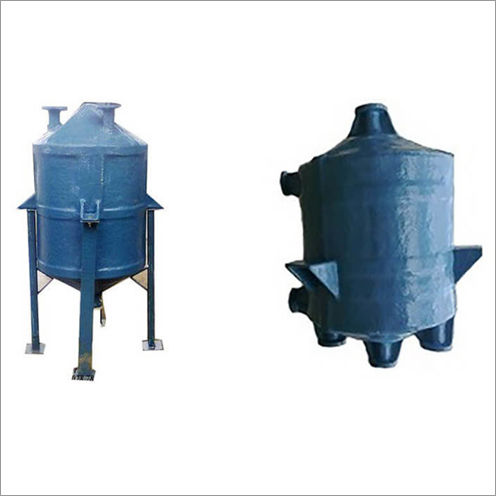
Tell us about your requirement

Price:
Quantity
Select Unit
- 50
- 100
- 200
- 250
- 500
- 1000+
Additional detail
Mobile number
Email


 Send Inquiry
Our Products
- Frp Molded/ Pultruded Gratings
- PP/FRP Products
- PPR Blue / PPRC Blue/ PPCH Air Compressor Pipe
- Hdpe Pipe & Fittings
- PP,PPH Pipe & Fittings
- Valves
- FRP Cable Tray
- Pneumatic System
- Pipe Support
- FRP Sheet
- Plastic Pipe
- Ball Valve
- Pipe Reducers
- Plastic Flanges
- PTFE Bellows
- Plastic Elbow
- Scrubbing System
- Plastic Tee
- FRP Tanks
- FRP Motor Cover
- PP Coupler
- FRP Bar Gratings
- Centrifugal Air Blower
- Cable Trays
- Polymer Sheet And Rod
- PP Blowers And Scrubber
- PP FRP Reactor
- Stub Ends
- PPFRP/PPHFRP/PP/HDPE Nustch Filter
- PPFRP/FRP Vaccume Receiver PPFRP Pressure Receive


506, 4th Floor, Tirupati Tower, GIDC, Char Rasta,Vapi - 396195, Gujarat, India

Mr. Bhaskar Dhar
(Partner)
Mobile :08045804817
 Send Inquiry
 Send SMS
 Call Me Free
Developed and Managed by Infocom Network Private Limited.
